Car Review
One in five searches on KSL Cars is for a Ford F-Series pickup truck. That is huge. But then again, the F-Series is — and has been — hugely popular in the marketplace for decades now. In fact, it has been America’s best-selling vehicle in the nation for more than 40 consecutive years.
Ford sold 750,789 trucks in 2023, making it once again the number one manufacturer for the year. Ford truck varieties have grown both literally and figuratively in recent decades, with pivotal changes for this workhorse across three of its generations.
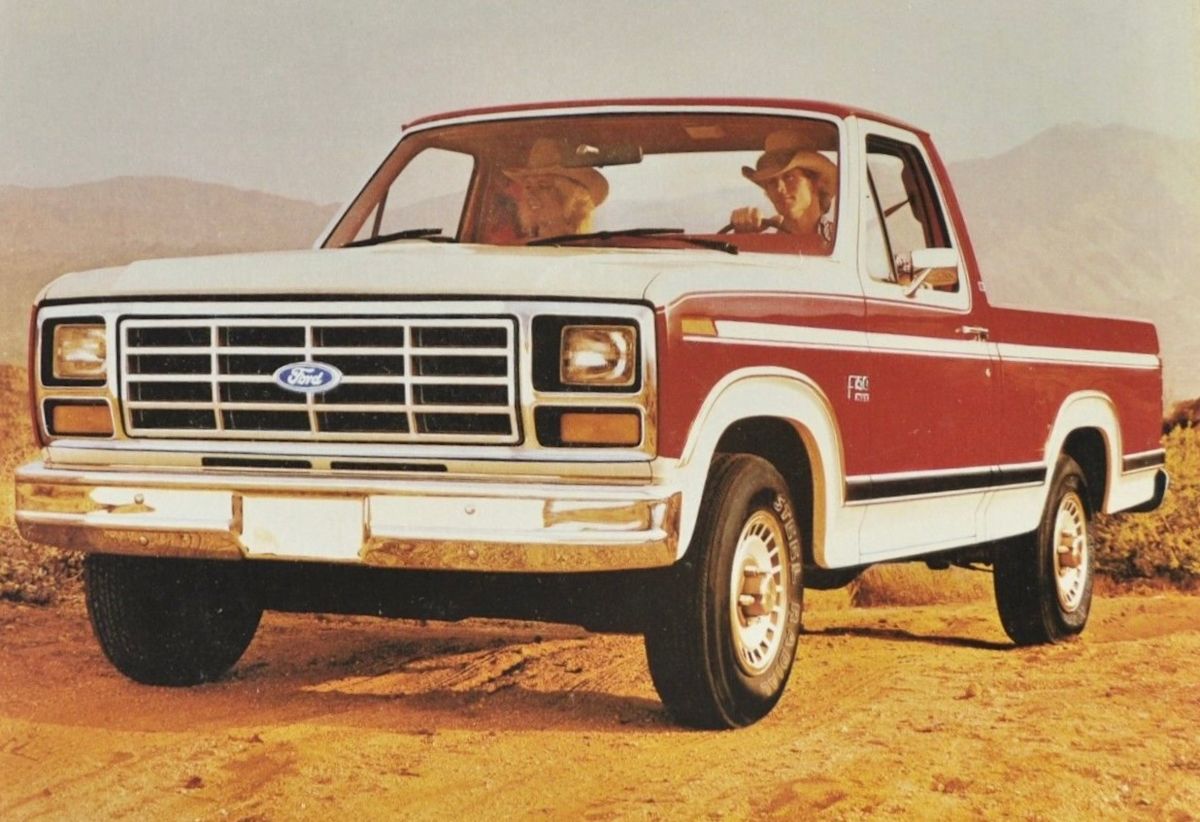
Photo credit: Ford
Ford launched its F-Series pickups in 1948 with some important engineering changes compared to earlier trucks. Most notably, the F-Series adopted its own platform as opposed to riding on a car platform, as was the case with prior versions of Ford trucks.
Pickups are classified or grouped based on their engineered hauling capacity and towing capability. Most people are familiar with Ford’s light-duty pickup, the F-150; it replaced the F-100 as the brand’s entry-level offering beginning in 1975.
Full-sized Ford trucks are now in their 14th generation, which is a testament to their popularity. It would take an anthology to chronicle the entire 70-year lifespan of the F-Series, so we’ll focus on the two decades which marked an important turning point.
Near the dawn of the new millennium, in model year 1999, Ford made a strategic change regarding its pickup lineup. It expanded the range of F-Series trucks by creating a standalone channel for its heavier duty trucks — more specifically, the F-250, F-350 and other models that were designed for heightened payloads compared to the consumer-oriented F-150. Ford called these trucks the Super Duty. Today, they continue with the fifth generation.
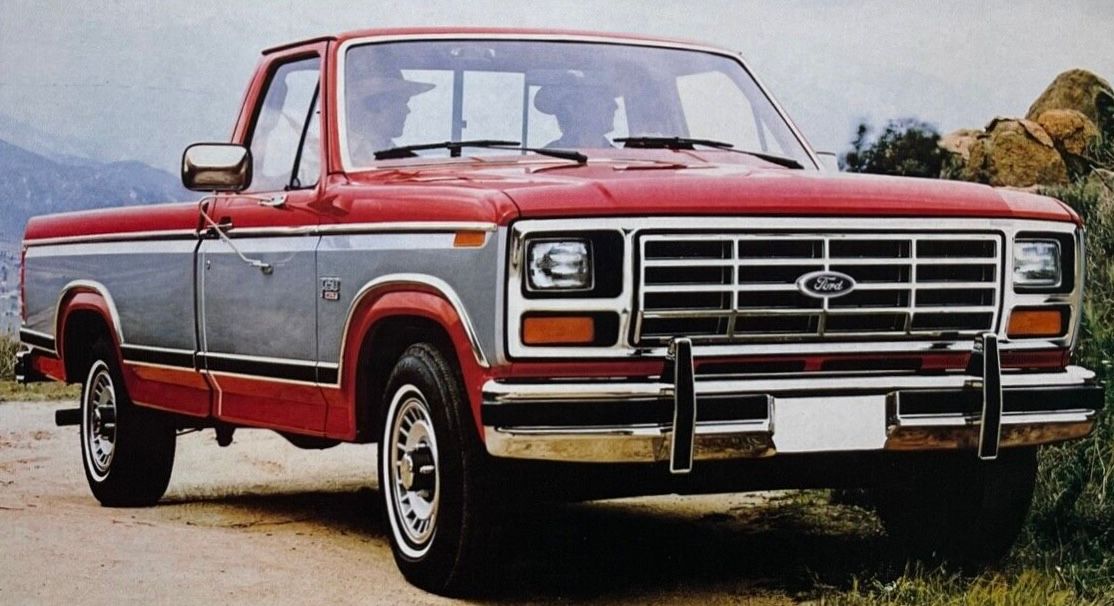
Photo credit: Ford
Some enthusiasts call the trucks from the late 20th century the Old Body Style. The origins of that nomenclature are not well-known, but the idea is easy to understand. Around model year 2000, many automobiles — not just trucks — took on more rounded shapes. In the years and decades that have followed, many people have clung to a preference for the older look — and a community was formed.
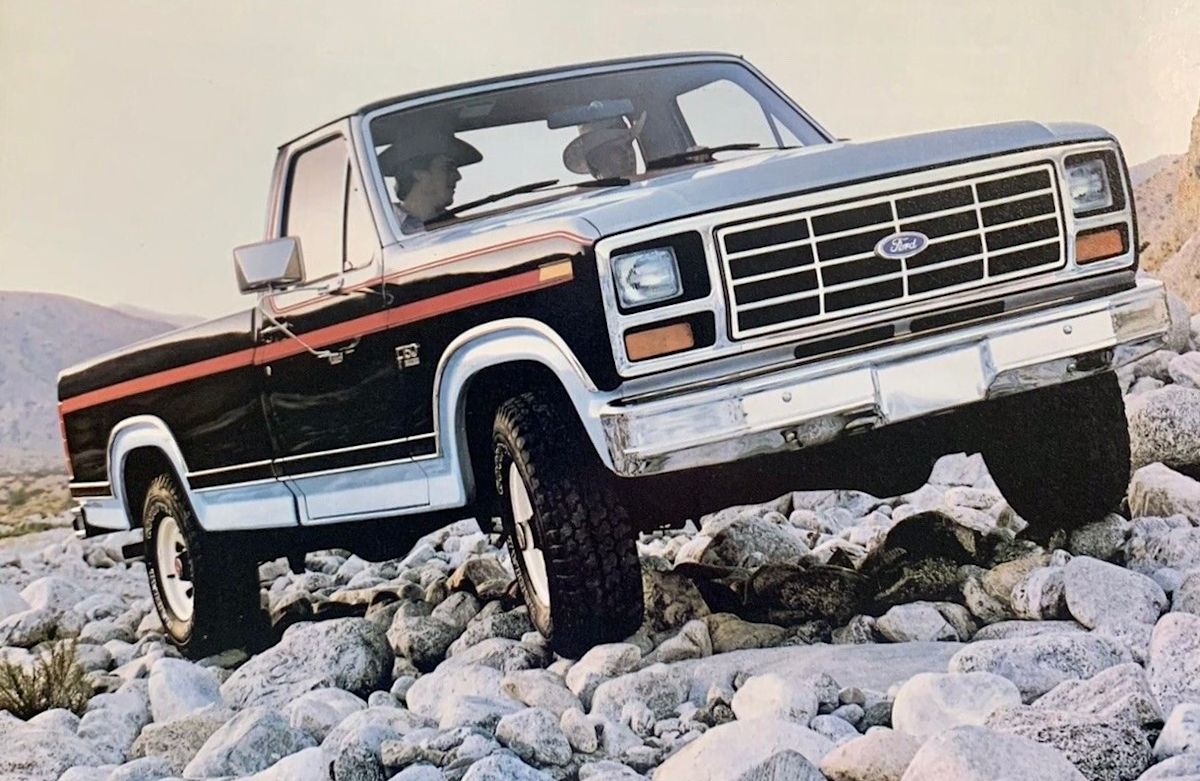
Photo credit: Ford
Model year 1980 marked a significant change in design for Ford trucks. A new, narrower chassis and body gave the vehicle, dubbed the Bullnose, flatter exterior lines. In light of the fuel crisis of the late 1970s, when the pickup was in development, design teams worked to increase efficiency without sacrificing capability.
Engines covered a variety of layouts and displacements, including a 232 cid V6, a 300 cid inline-6, and several optional V8s up to a big-block measuring 460cid (7.5 litres) in size. Worth noting, these were the first Ford trucks to wear the blue oval emblem in the center of the grille.
Browse seventh generation Ford listings
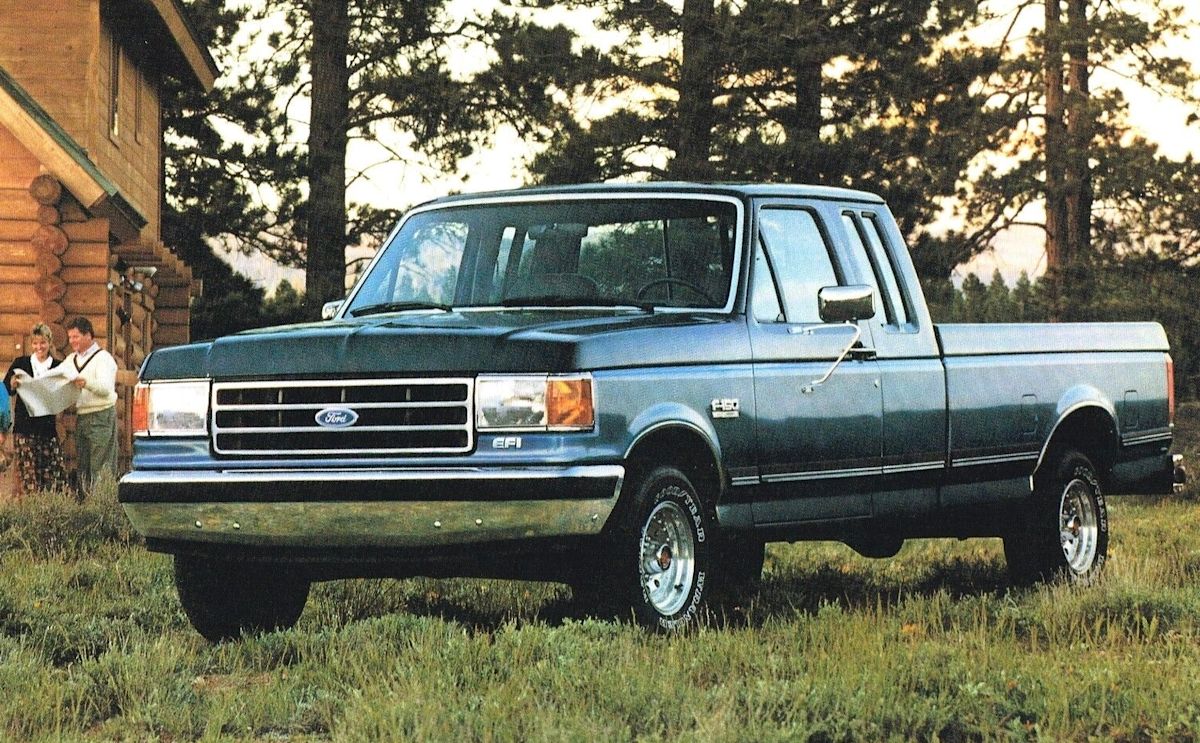
Photo credit: Ford
Dubbed the Bricknose era, the facelifted eighth generation F-Series received an aerodynamic front end. Power brakes, power steering and rear anti-lock brakes became standard equipment, adding to the list of creature comforts.
Trucks were available in trim levels ranging from the basic Custom, with vinyl flooring, up to an XLT Lariat with chrome accents and a leather-wrapped steering wheel. A blacked-out Nite version came out in 1991. Power wise, many of the same engines carried over from the early 1980s, but the base 4.9-liter inline-6 received fuel-injection. The eighth-generation pickups were only offered with a flareside (or stepside) bed layout for one year, in 1987.
Find listings for eighth generation F-Series
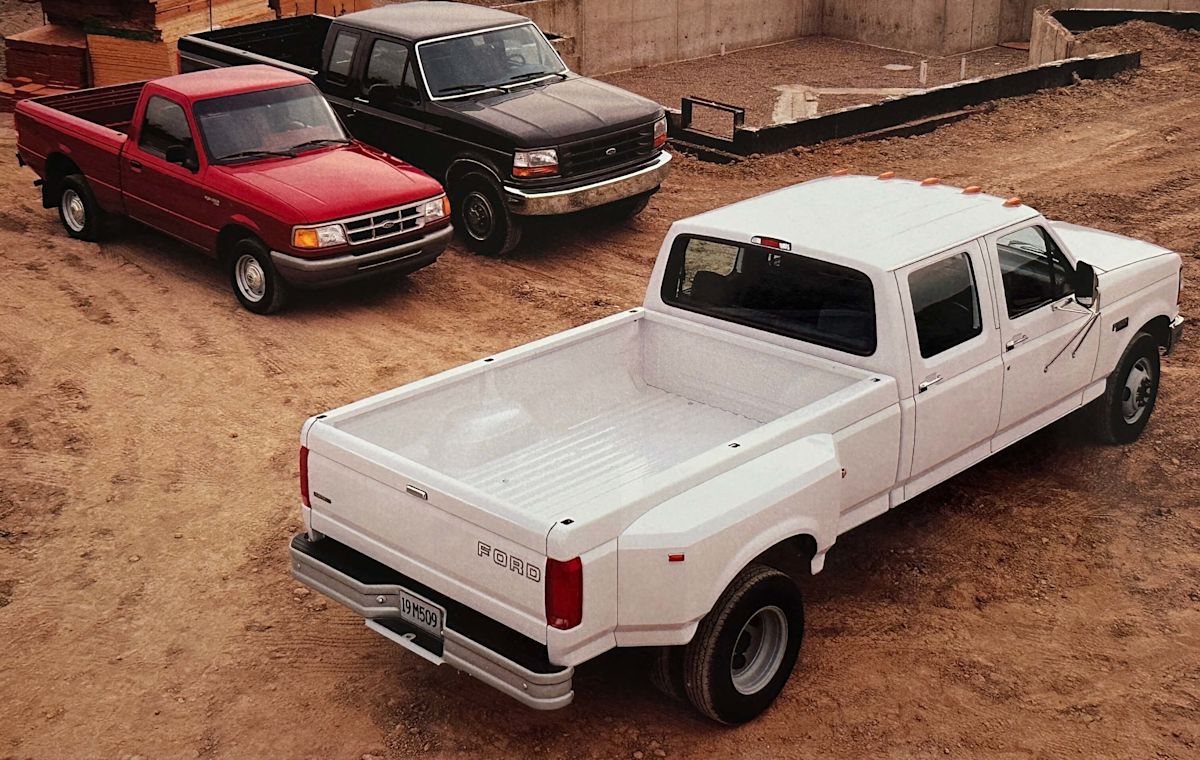
Photo credit: Ford
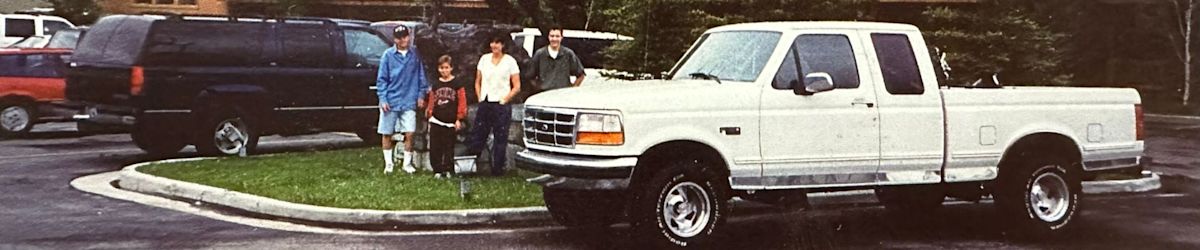
Once again repurposing the bed and cab chassis architecture, the ninth generation brought a more rounded hood and a revised front fascia. Also, all F-Series trucks were now fuel injected. An important drivetrain change was made starting in 1994, when a 7.3-liter turbo diesel Power Stroke was first introduced.
Ford also dipped its toes into the performance realm during this era, courtesy of the Lightning F-150 — a high-output creation of the company’s Special Vehicles Team. It utilized an upgraded version of the 5.8-liter V8 and was rated at 240 horsepower and 340 pound-feet of torque.
Search 1990s Ford pickups on KSL Cars
It was the ninth generation of F-Series that I felt most connected to from a young age. Growing up, my dad had a number of these. A quarter century later, I finally decided it was time to satisfy my need for nostalgia by buying one.
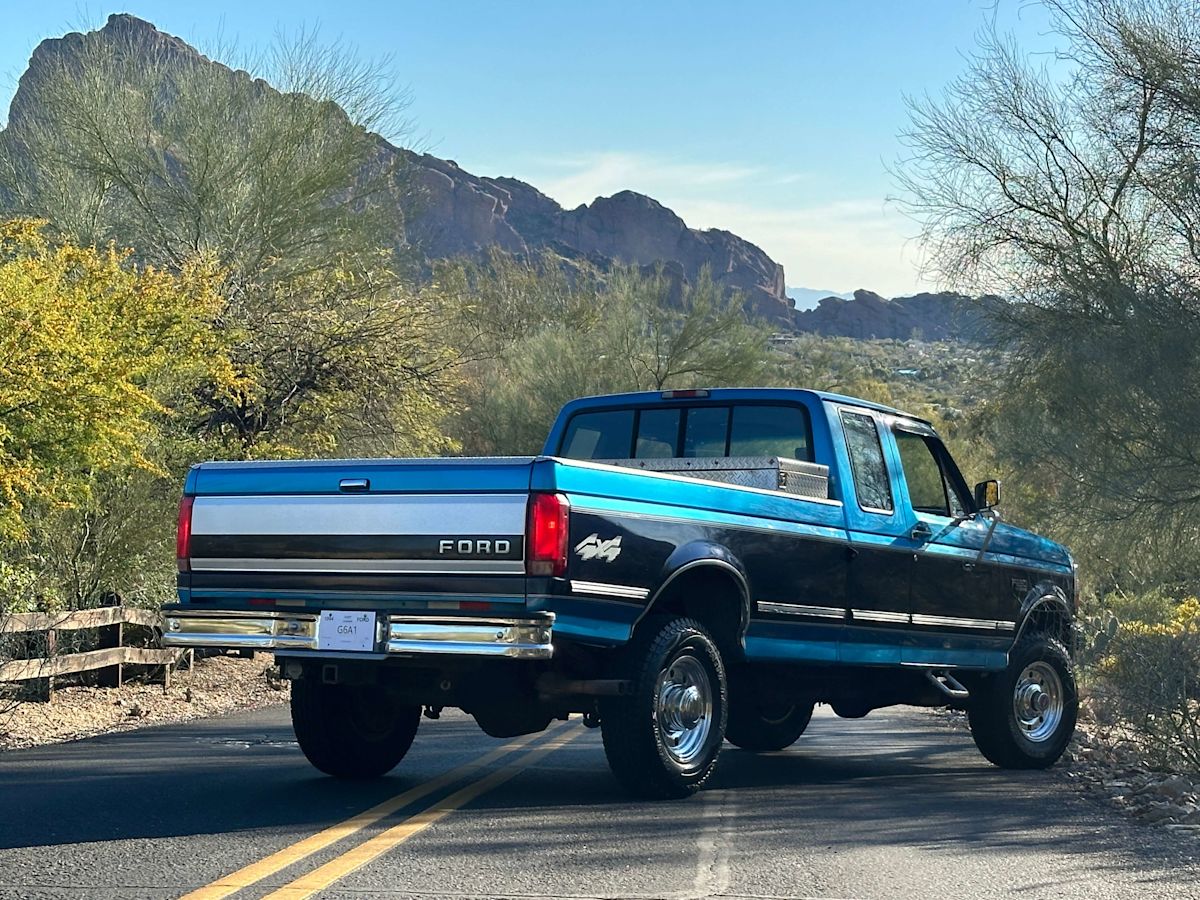
Photo credit: Tyson Hugie
I acquired a 1994 F-250 XLT 4x4 SuperCab in two-tone Brilliant Blue and Royal Blue. Even at 30 years old, it had only accrued 92,000 miles on the odometer. And based on the condition, it was utilized more as a recreational rig than a rugged workhorse. I am excited to see what I can do with the truck in the months and years to come. And needless to say, dad approved of the purchase.
We recently highlighted a buyer’s guide for some modern-day pickups, so steer that direction if you are looking for a later-model ride. If you are an OBS fan and an older F-Series is on your list instead, KSL Cars is the place to shop. Browse the pickup listings to find your dream machine.
*KSL Cars does not endorse any vehicles. The views or opinions expressed in this article are those of the writer and do not reflect the views or opinions of KSL.com or its employees.