
Car Buying Tips
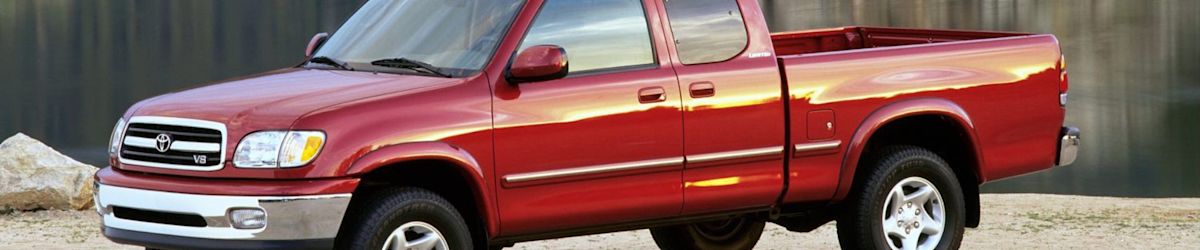
The Toyota Tundra marked a significant step for the Japanese brand when it launched. It wasn’t Toyota’s first full-size pickup; the former T100 model held that role as part of the model lineup between 1993 and 1998. But the Tundra’s debut in 2000 marked a brave move to step up and go after popular large trucks from domestic manufacturers including General Motors, Dodge and Ford.
Toyota had already earned a reputation for its expertise building compact trucks. In fact, the company still occupies a significant share of the light-duty segment. For example, in the third quarter of 2022, Toyota sold more than twice as many Tacomas as Tundras. Still, the larger truck has made inroads on the U.S. market.
The first Tundra was unveiled at auto shows nationwide as a T150 in May 1999 as a 2000 model. Ford felt the name was too similar to its F-150 pickup and threatened a lawsuit — so Toyota went with Tundra.
Right out of the gate, Toyota had a success story on its hands: Motor Trend crowned it Truck of the Year. Chassis architecture shared similarities to the Toyota Sequoia full-size SUV.
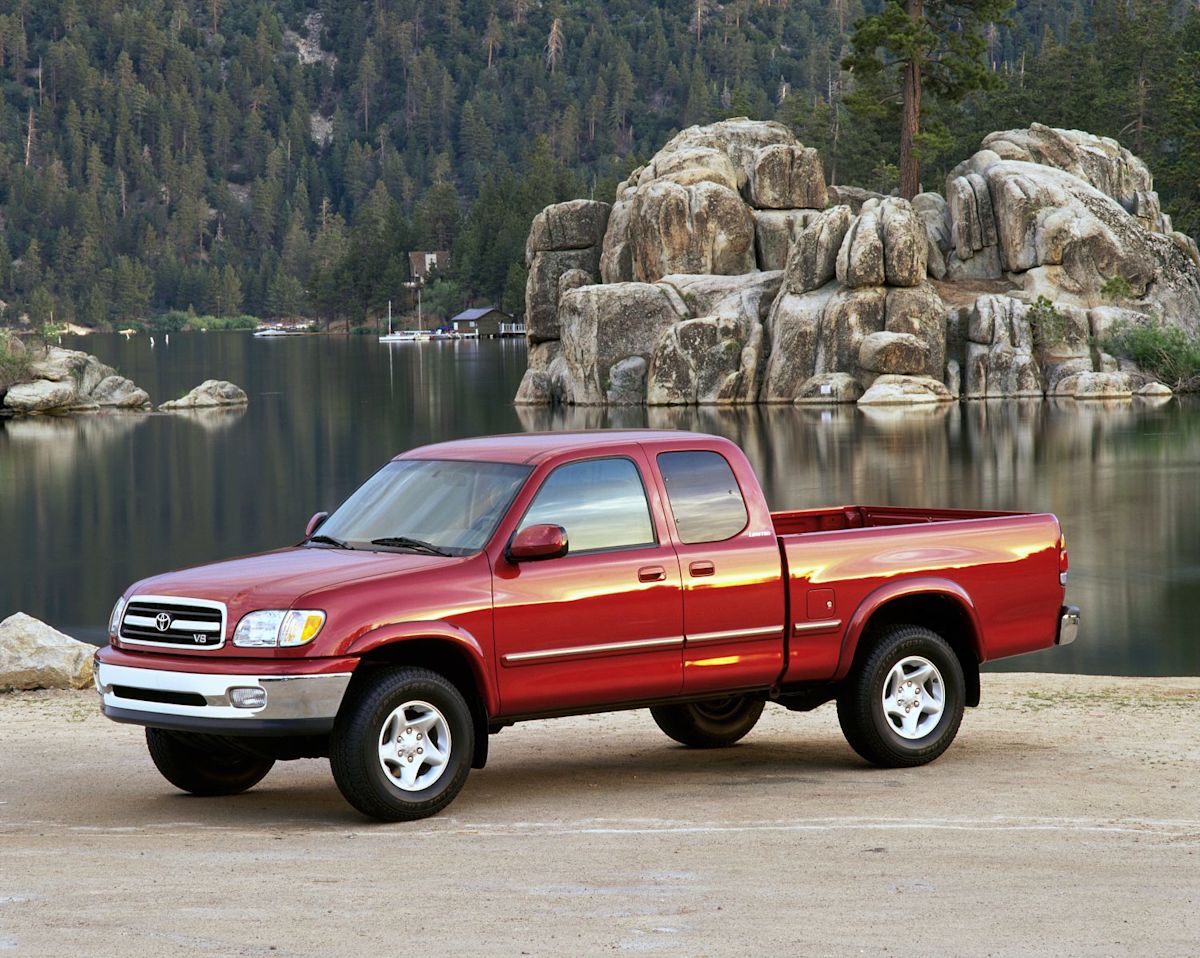
The 2000 Toyota Tundra started strong as Motor Trend's Truck of the Year. Photo by Toyota.
The base engine was a 3.4-liter V6; a 4.7-liter i-Force V8 was included on the option list. This was the first available V8 engine for a Toyota truck, and its ratings of 245 horsepower and 315 pound-feet of torque were respectable in the segment. Transmission offerings included a 5-speed manual, a 6-speed manual, a 4-speed automatic and a 5-speed automatic.
Initially offered in regular cab and access cab models, the body styles were expanded to include a stepside in 2003 and a four door double cab in 2004. See first generation Tundra listings
For its second generation, the Tundra grew both in size and in capability. Now at the top of the engine offering list was a 5.7-liter V8 with 381 horsepower and 401 pound-feet of torque. This motor enabled the Tundra to take on a towing capacity of up to 10,000 pounds and a payload capacity of over 2,000 pounds, making its qualifications to play in the big leagues even more evident. A limited-slip differential came as standard equipment in order to get all that power to the pavement.
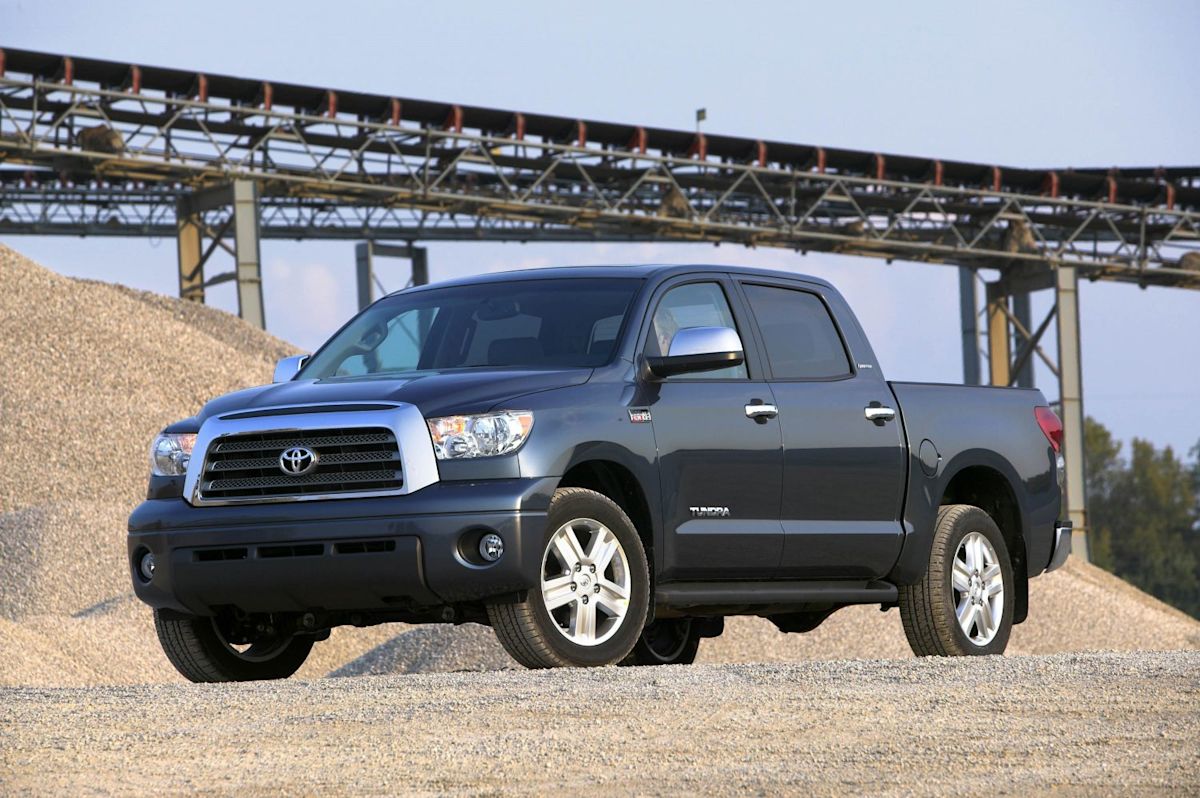
The 5.7-liter V8 engine of the 2007 Toyota Tundra proved its qualifications to play in the big leagues. Photo by Toyota.
Thanks to three bed lengths, three wheelbases, three cab configurations and two transmissions, there seemed to be a Tundra for everyone. A comprehensive midcycle refresh was carried out in 2014. Only the cab and doors remained — the remainder of the exterior layout was changed. The update also brought a newly redesigned interior.
A number of special trim levels came to market during this era. Toyota stepped up the luxury amenities with a 1794 Edition that came with leather heated seats, woodgrain trim, a power sunroof, a JBL premium audio system and unique 20-inch wheels.
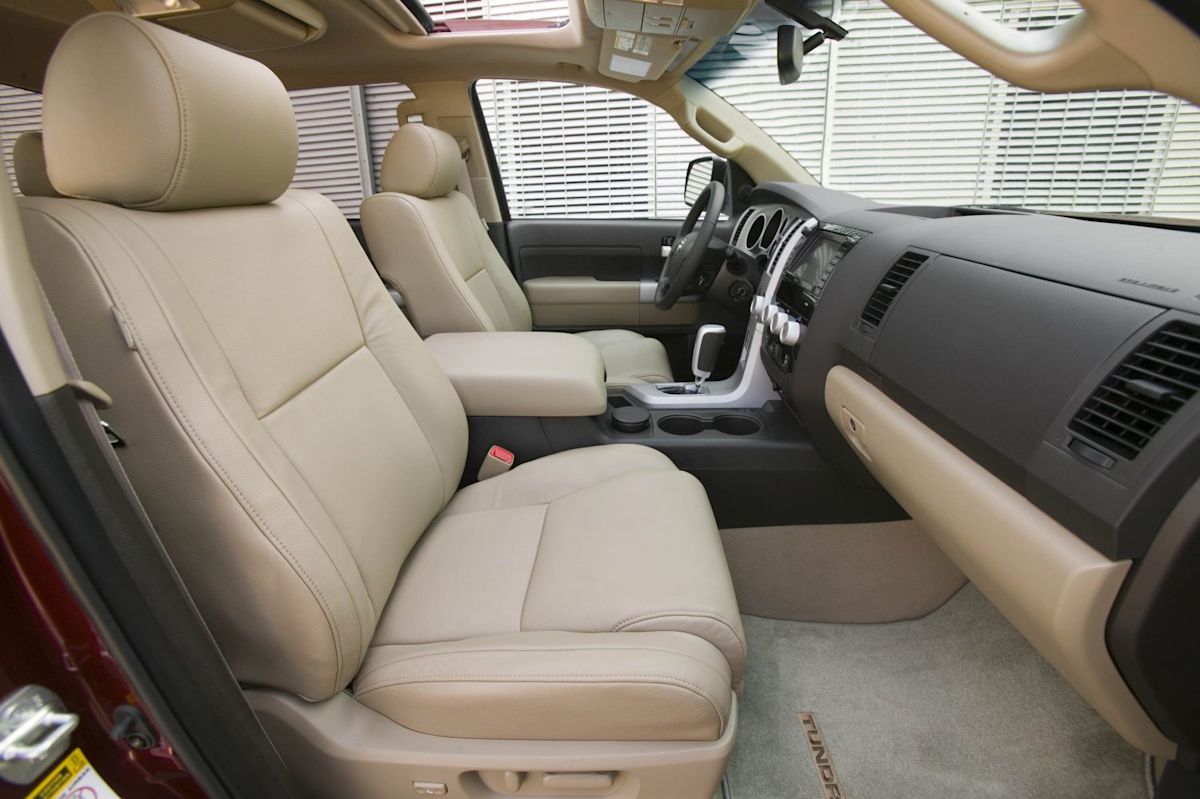
The interior of the 2007 Toyota Tundra was loaded with luxury amenities. Photo by Toyota.
In addition, the bar was raised with regard to off-road capability when the TRD Pro model debuted in 2015. This Tundra was engineered by Toyota’s in-house performance division — Toyota Racing Development; it came with upgraded shock absorbers, additional ground clearance, a special exhaust system and a skid plate. Shop second generation Toyota Tundras
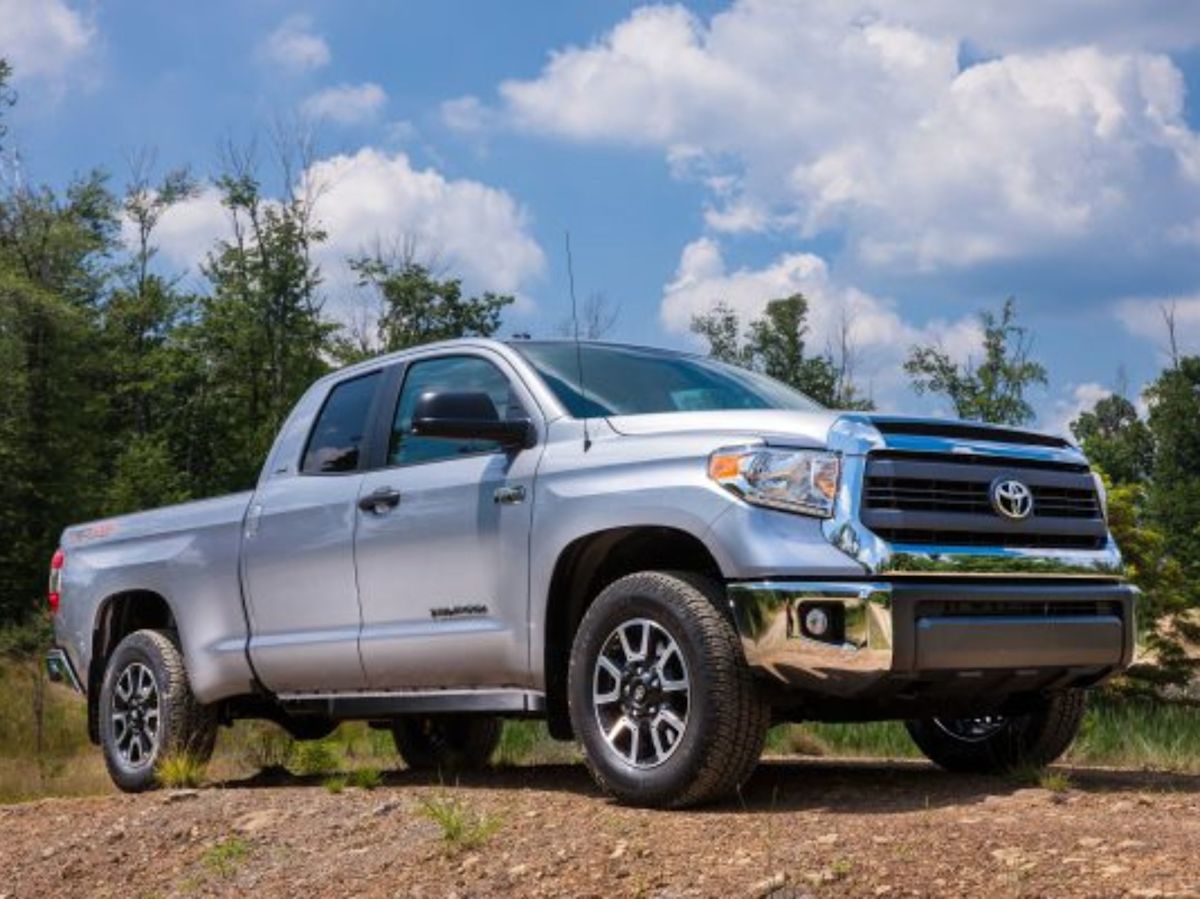
The 2015 Toyota Tundra introduced the TRD Pro model. Photo by Toyota.
Built on the GA-F platform, the third-generation Tundra debuted for model year 2022 with a more squared-off, rugged exterior design. Toyota’s e-brochure said, “Reengineered with uncompromising power. Equipped with advanced capability features. And decked out with premium creature comforts inside.”
Two powertrain options are available. The first is a 5.4-liter twin-turbocharged V6, and the second is a hybrid version of the same (this time called an i-Force Max). Both come with a 10-speed automatic transmission as the only available option. Even with two fewer cylinders, the modern V6 produces more power than the outgoing generation’s V8; it is rated at 389 horsepower for the non-hybrid and 437 horsepower for the hybrid. Towing capacity can reach up to 12,000 pounds.
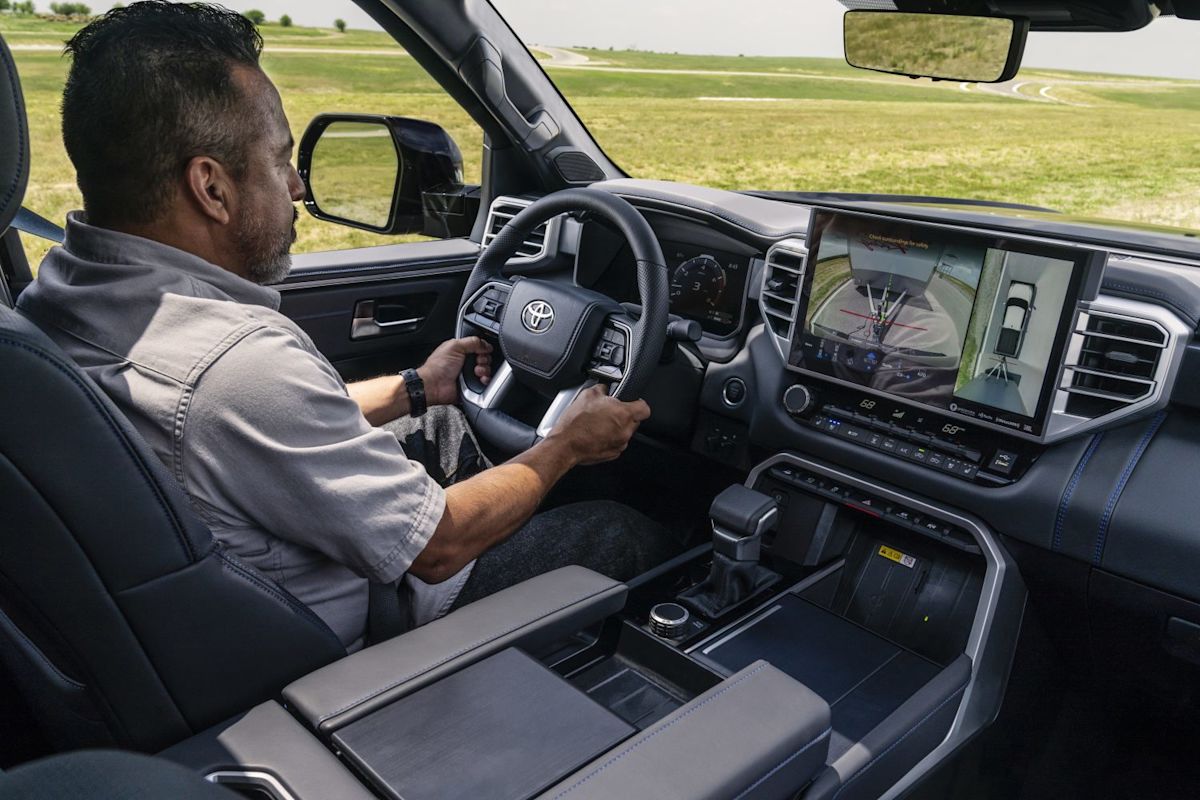
All Tundras, like this 2023 Toyota Tundra, are manufactured in San Antonio, Texas. Photo by Toyota.
A regular cab configuration is no longer offered; a four-door extended cab and a four-door crew cab are the only cabs available. It’s worth mentioning that all Tundras are manufactured in San Antonio, Texas. After all, Texas is truck country.
The 2024 Tundra starts at a $39,965 retail price and is available in Limited, 1794 Edition and TRD Pro trim levels. Detailed specifications are found on Toyota’s website, but standard equipment is generous and includes:
LED lighting
power rear window
12.3-inch digital instrument cluster
dual-zone automatic climate control with rear vents and much more.
Find third generation Toyota Tundra listings on KSL.
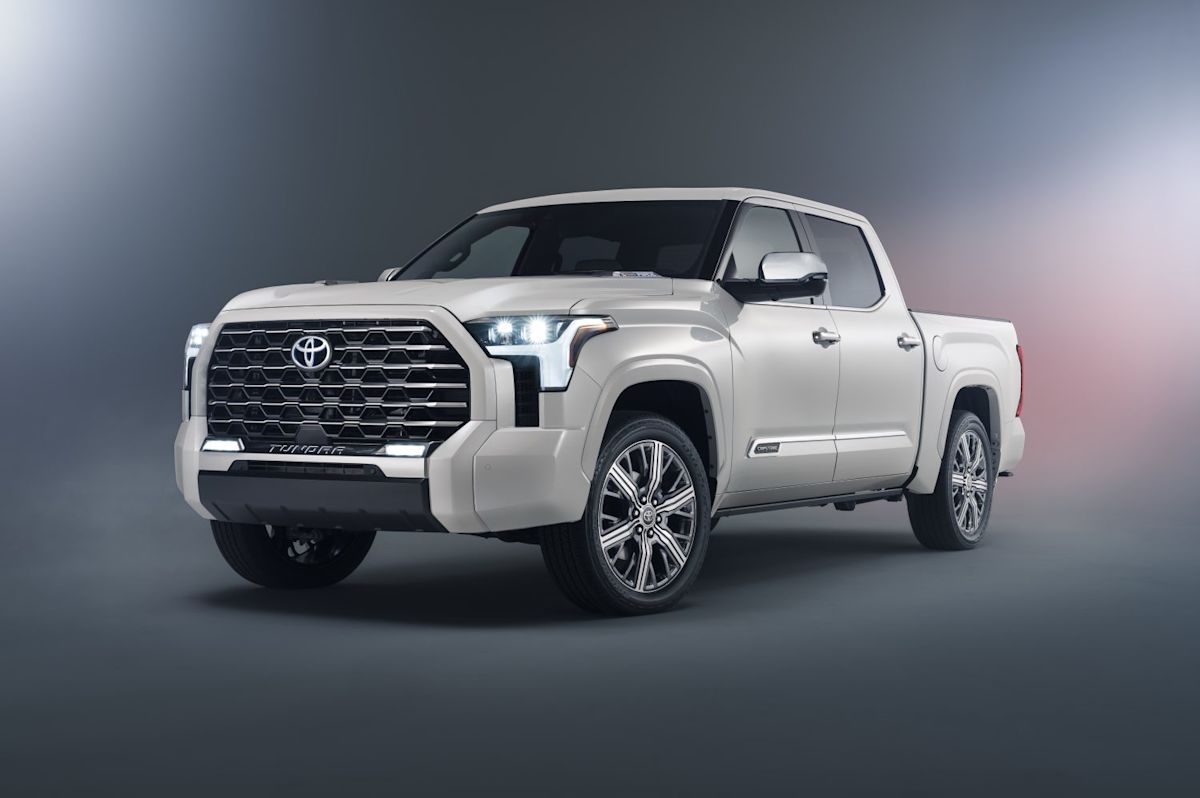
The 2023 Toyota Tundra is available in Limited, 1794 Edition and TRD Pro trim levels. Photo by Toyota.
In case you need any additional motivation to join the Tundra family, consider this: Tundras are known to be reliable, some logging one million miles or more. They’re hearty, too. An unmodified 2012 Tundra CrewMax 4x4 pulled the more than 270,000-pound Space Shuttle Endeavor across an overpass in California in 2012. Talk about torque.
If Utah’s winter wrath has you second-guessing whether you have the right vehicle to brave the conditions, consider a Tundra. Browse more than 500 listings on KSL Cars to find one that meets your needs for working, playing, towing or anything else.
*KSL Cars does not endorse any vehicles. The views or opinions expressed in this article are those of the writer and do not reflect the views or opinions of KSL.com or its employees.