Car Buying Tips
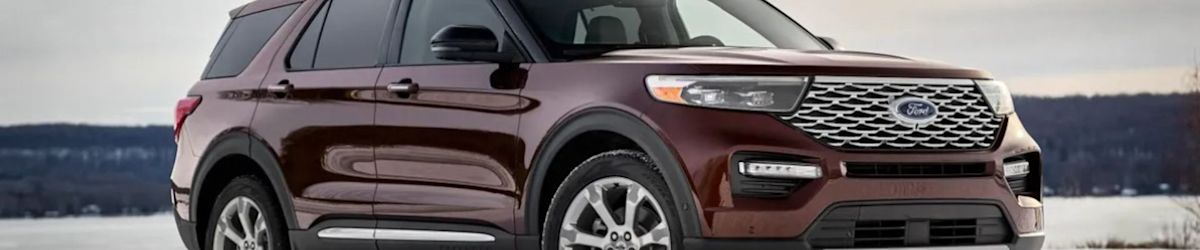
The sport utility vehicle marketplace heated up in the late 1980s and early 1990s. Ford was already a key player in the segment with its full-size Bronco and compact Bronco II, but a game changer hit showroom floors in 1991.
The Ford Explorer put the wheels in motion (literally) for five subsequent generations. The Explorer has become a household name for many Utah families. In fact, it ranked in the top searches of KSL Cars in 2023.
From the beginning, marketing materials called attention to Explorer’s versatility. Its mission was to deliver both sport and utility. A 1991 ad used the tagline “Escape the Concrete Jungle,” while another said, “After a tough day in the country, take it out on the town.” More than 30 years later, the Explorer continues its mission to serve multiple purposes.
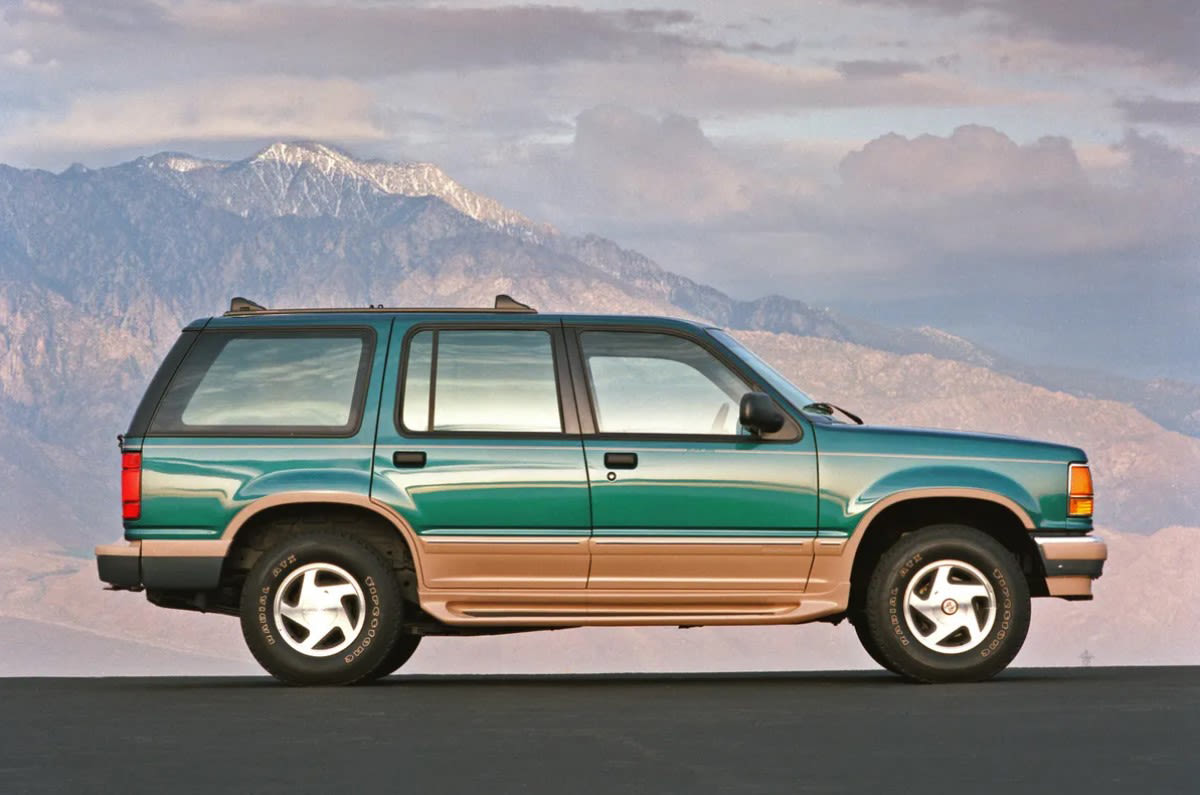
Photo courtesy of Ford
Sharing engineering and design language with the compact Ranger pickup truck, the Explorer came to market in 1991 and was offered in three-door and five-door variants. Power came from a 4.0-liter Cologne V6 mated to either a 4-speed automatic or a 5-speed manual transmission. Buyers could choose from rear-wheel drive and four-wheel drive options.
Trim wise, the base level was named XL; the XLT added a chrome grille and alloys. The Eddie Bauer brought two-tone paint, and the Limited held the top-tier position in the lineup. Among the Explorer’s selling points were its long wheelbase, deep cargo area, twin-traction beam front suspension and shift-on-the-fly 4WD system.
Adding to the pop culture SUV craze during this era was the Explorer’s prominent feature as a hero vehicle in the classic 1993 movie “Jurassic Park.”
Browse first generation Ford Explorer listings
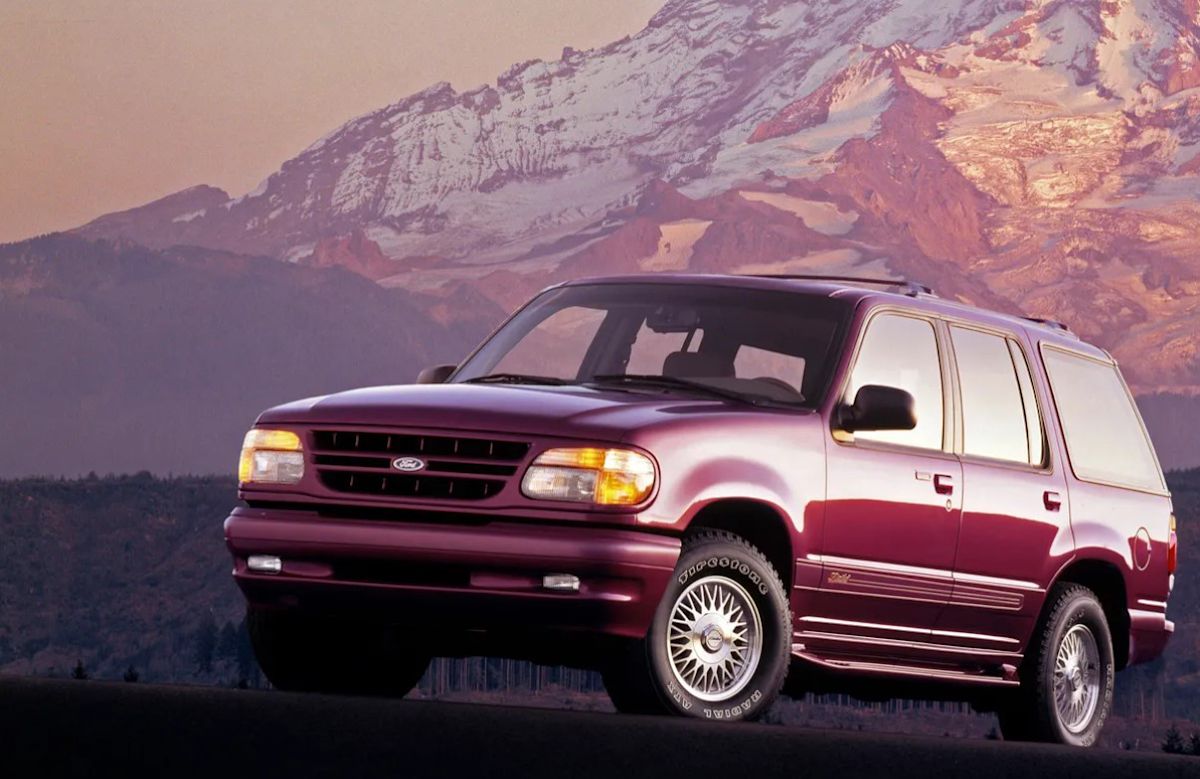
Photo courtesy of Ford
When the Explorer evolved into its second iteration, its exterior design took a departure from the Ranger pickup. Design language was notably more rounded than before, with oval headlights and an oval grille with, of course, the blue oval emblem at its center.
One of the most important updates had to do with the drivetrain. For the first time, the Explorer could be optioned with a 4.9-liter V8 engine that was rated at 210 horsepower. One key feature for this generation was class exclusive dual airbags. A few other equipment updates included four-wheel disc brakes, a floor console with rear air controls and remote keyless entry.
A midcycle update in 1998 brought a restyled tailgate and control arm front suspension. Many of the trim levels from the first generation carried over, ranging from the XL on the low end to the Limited and Eddie Bauer up top.
Find second generation listings on KSL Cars
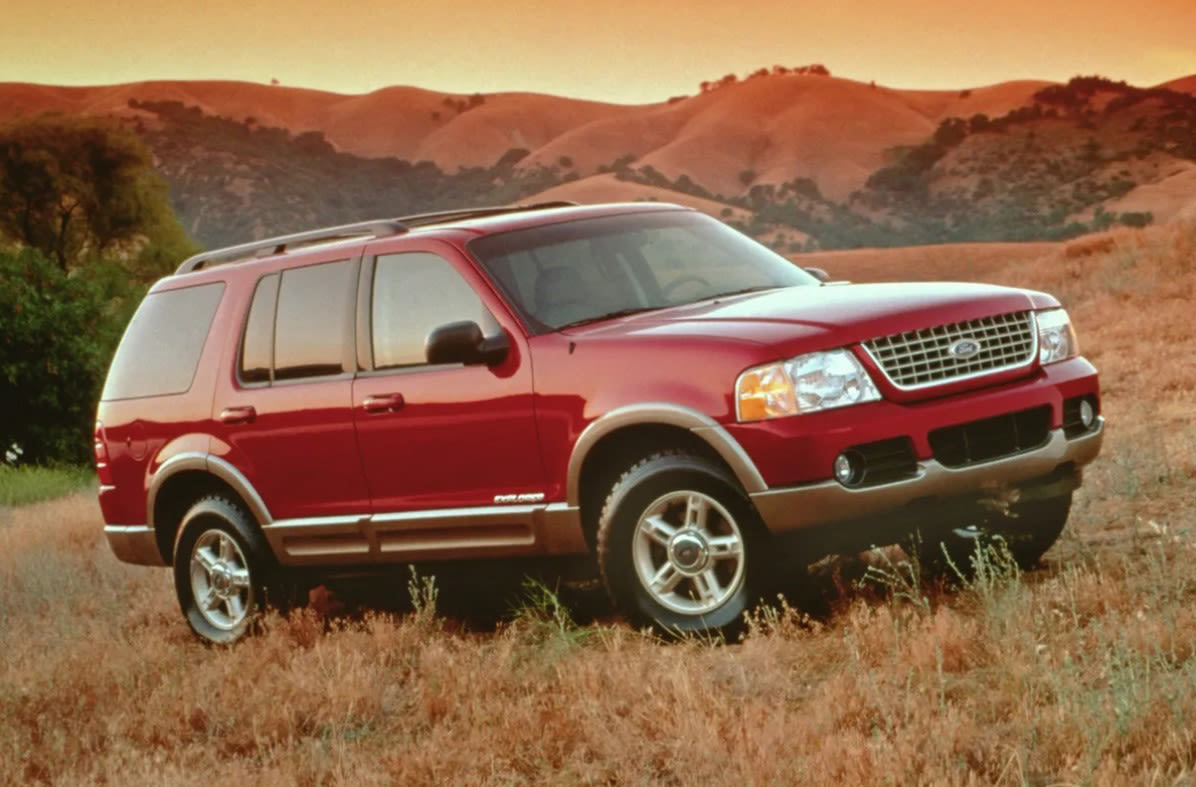
Photo courtesy of Ford
There was brief overlap in the early 2000s when the Explorer Sport three-door, from the second generation, was sold alongside the all-new four-door. One of the main engineering emphases employed during this era was ride handling optimization.
With that in mind, its chassis was developed separately from the Ranger and its wheelbase was lengthened. Also, the suspension took on a four-wheel independent arrangement for the first time in the model’s history.
Engine offerings included a 4.0-liter V6 at the entry level and a 4.6-liter modular V8 at the top. Design wise, there were strong family resemblances between the Explorer and its larger sibling, the Expedition. Trim offerings ranged from an XLS (largely for fleet sales) to the Eddie Bauer and Limited at the top.
Shop third generation Ford Explorers
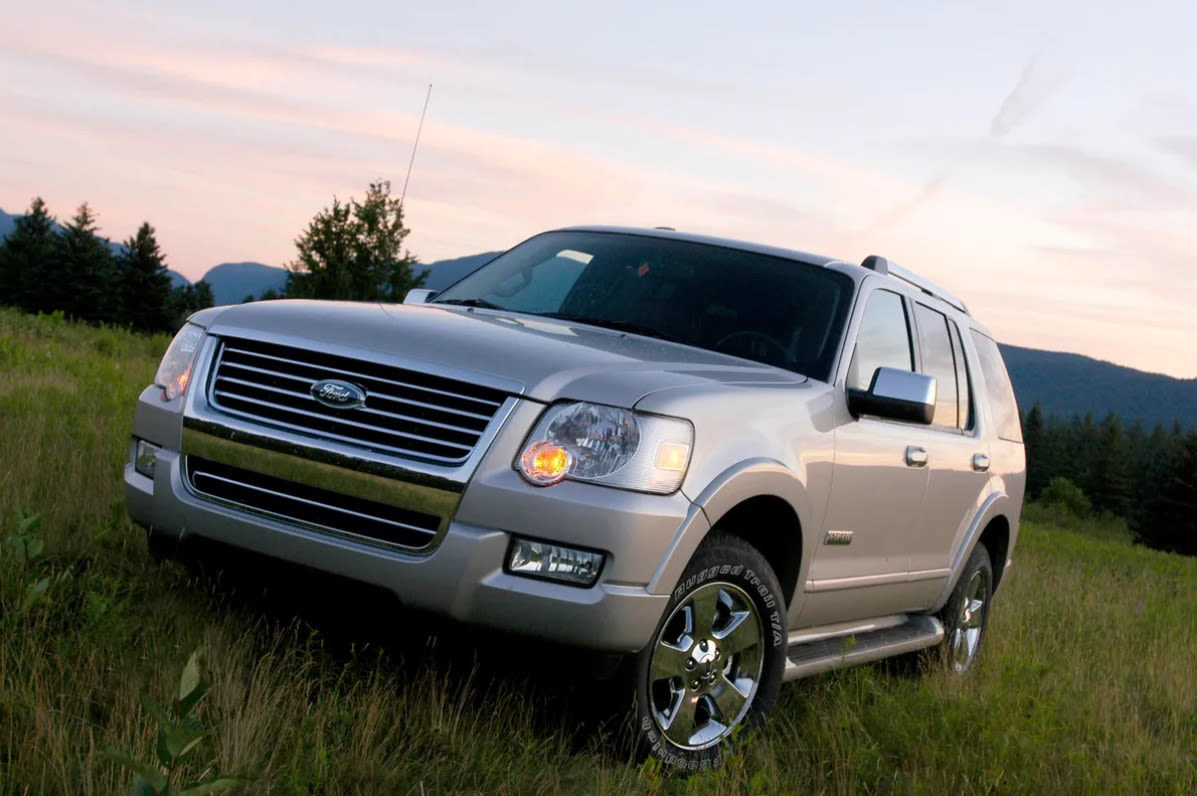
Photo courtesy of Ford
This era was when technology started moving to the next level. A power-folding third-row seat, power-deployable running boards, a trailer sway control system and electronic stability control all made their debut during the fourth generation.
Another safety advancement was a smarter air bag system; it used the driver's seating position to adapt the airbag system for optimal deployment. This would be the last generation of the Explorer to use body-on-frame construction; Ford touted its frame to be 63% stiffer than in previous generations.
Engine offerings included a 210-horsepower 4.0-liter V6 and a 292-horsepower 4.6-liter V8 — the highest-output motor for the Explorer to date.
Search fourth generation Explorer listings
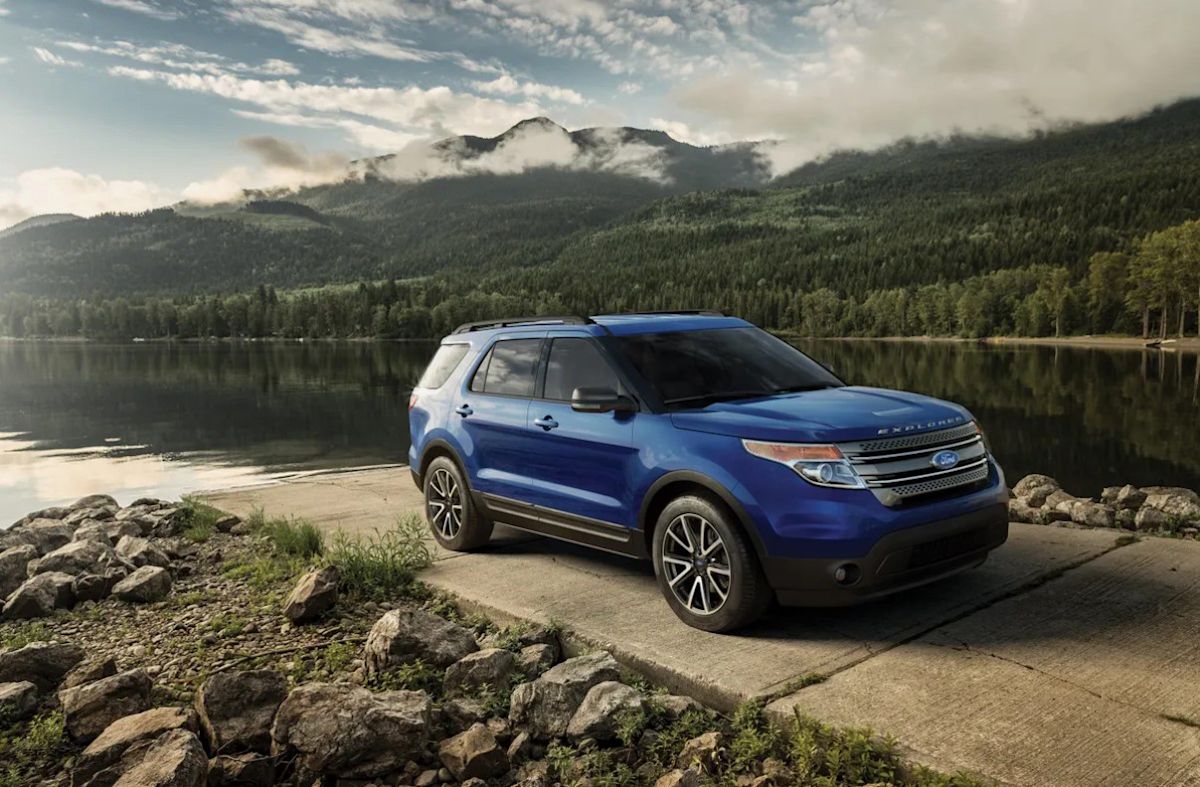
Photo courtesy of Ford
Ford took a fresh approach to chassis engineering in 2011, moving the Explorer to a car based front-wheel-drive crossover with unibody construction. There were benefits to such an arrangement, primarily when it came to handling optimization.
Ford advertised this Explorer’s ability to adjust driving dynamics via a dial style terrain management system, with mud, sand and snow settings. A facelift in 2016 gave the Explorer a new look that bore a striking resemblance to Range Rover vehicles.
Its technological advancements took a big leap forward with the introduction of adaptive cruise control, lane-keep assist, rain-sensing wipers and collision mitigation automatic braking.
Browse fifth generation Ford Explorer listings
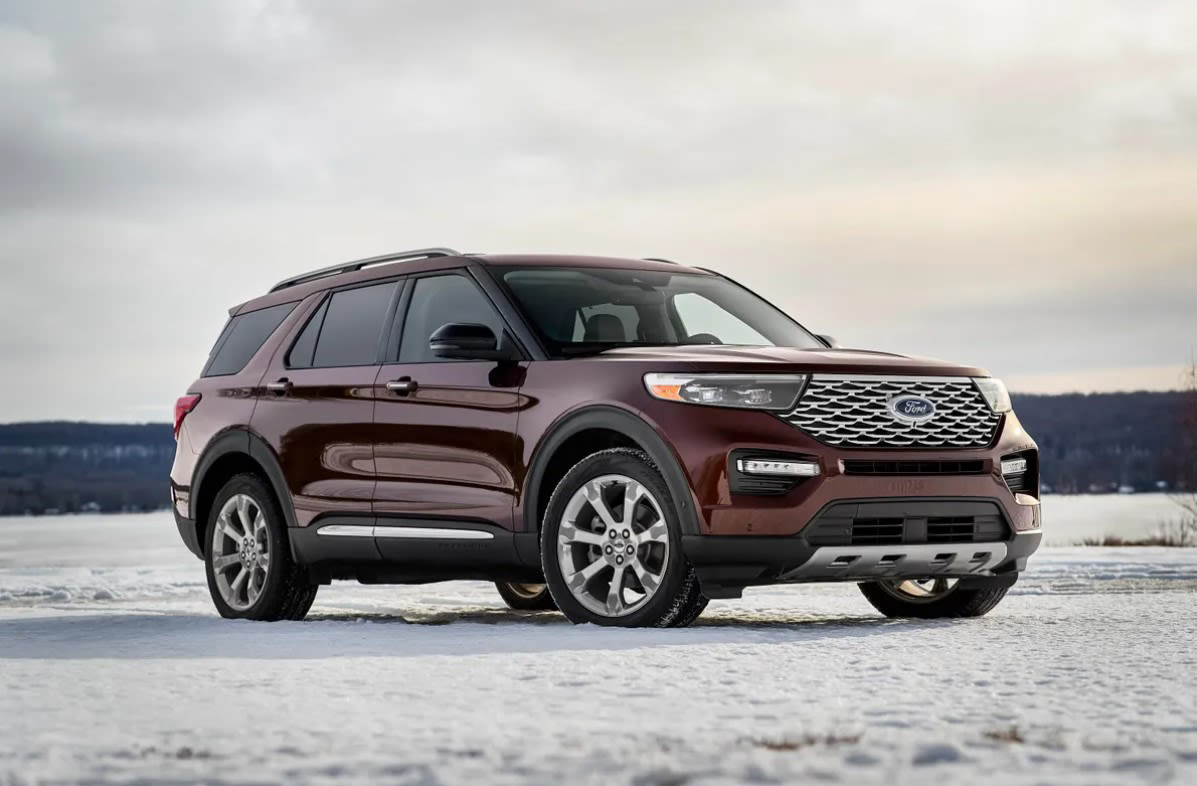
Photo courtesy of Ford
For its latest and current iteration, the Explorer returned to a rear-wheel-drive platform, although it retained unibody architecture. Ford called this generation “redesigned from the ground up.”
The base engine was an ecoboost-turbocharged 2.3-liter 4-cylinder, but those seeking more performance could opt for a turbocharged 3.0-liter with 365 horsepower. It was during this generation that Ford began offering a hybrid powertrain.
A high-performance ST model added both performance and cosmetic flair. Some of the selling points for this generation were improved towing capacity, athletic design, driver-assist innovations and a quieter cabin.
Search sixth generation Ford Explorers
Interestingly, Ford’s Explorer was related both cosmetically and mechanically to other models during the time. The Mercury Mountaineer and Mazda Navajo were essentially rebadges with some cosmetic updates. The Ford Explorer Sport Trac — an Explorer-based pickup that was sold from 2001 to 2010 — was also similar.
Ford has sold more than 8 million Explorers since the debut of the nameplate, and the model’s momentum is still strong. Shop all SUV listings on KSL Cars.
*KSL Cars does not endorse any vehicles. The views or opinions expressed in this article are those of the writer and do not reflect the views or opinions of KSL.com or its employees.