Car Review
The automotive landscape was forever changed in the mid-1960s when Ford launched the Mustang and started what became known as the “pony car” segment. General Motors followed suit within a couple of years, launching the Camaro. Its name reportedly came from a French-English dictionary and was slang for “comrade.” More specifically, Chevrolet envisioned the relationship of a car to its owner as something akin to a friendship. More than five decades later, the Chevrolet Camaro has since found its way into hundreds of thousands of homes and continues to have a special place in American culture. See Camaro listings
Early Camaro models rode on the General Motors F-body platform, which was shared with the Pontiac Firebird. The two cars evolved together in the years that followed. In 1993, a fourth-generation model debuted, offering body styles in T-top, liftback coupe and convertible variations. Chevrolet packaged the same general formula into the new design, retaining a two-door, four-seat configuration with rear-wheel drive. At a $13,399 base price, the car was seen as a solid value and achieved a strong start in the marketplace. Initial production consisted of nearly 40,000 units. Some body components of the fourth-generation Camaro, including the doors, hatch and spoiler, were made of a special compound that offered high strength along with reduced weight. This manufacturing technique also allowed designers to craft shapes and angles that couldn’t be produced using conventional sheet metal stamping.
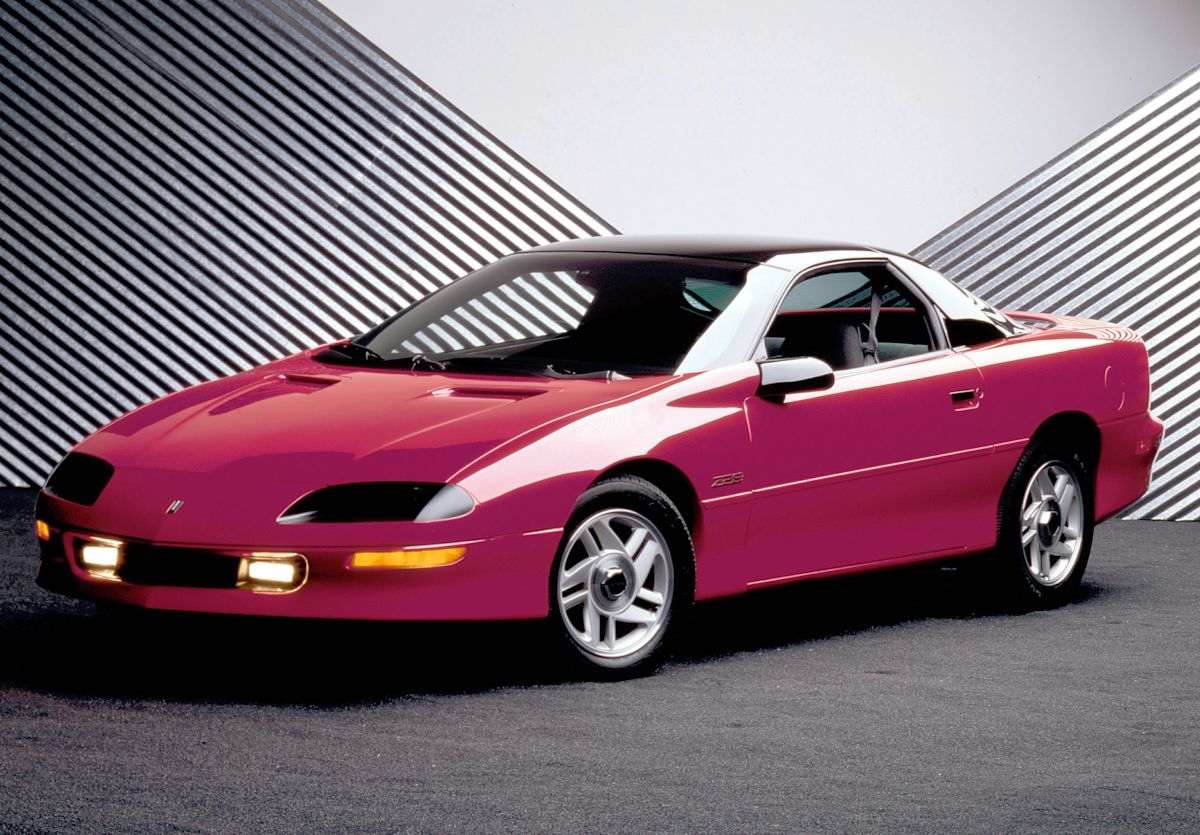
Advancements over the prior generation were made in suspension architecture, through the implementation of a torque-arm setup in the rear and double wishbones up front. Steering, too, was improved by replacing older recirculating ball engineering with a rack and pinion arrangement. Driver feedback became vastly enhanced, and the car’s performance capabilities were further justified. Finally, the addition of four-wheel anti-lock disc brakes and dual airbags brought safety appointments to the Camaro for the first time. See 1993 to 2003 Camaros for sale
Five different engines were available during this generation as the decade of fourth-generation production progressed, ranging from a 3.4-liter V6 on the low end to a 5.7-liter LS1 V8 for performance models. Some of these power plants were shared with, or at least inspired by, the Camaro’s Corvette sibling. There were a variety of transmissions offered including a 4-speed automatic, a 5-speed manual and a Borg-Warner 6-speed manual.
A noteworthy Camaro was brought to the market in 1996 called the Super Sport. Engineered in partnership with Street Legal Performance, this Z/28 SS model took Camaro performance to new levels. Among its special equipment options were a functional hood scoop, revised brake system and wider tires. Under the hood, the car’s 300-horsepower V8 pushed this Camaro to 60 mph in just 5.3 seconds.
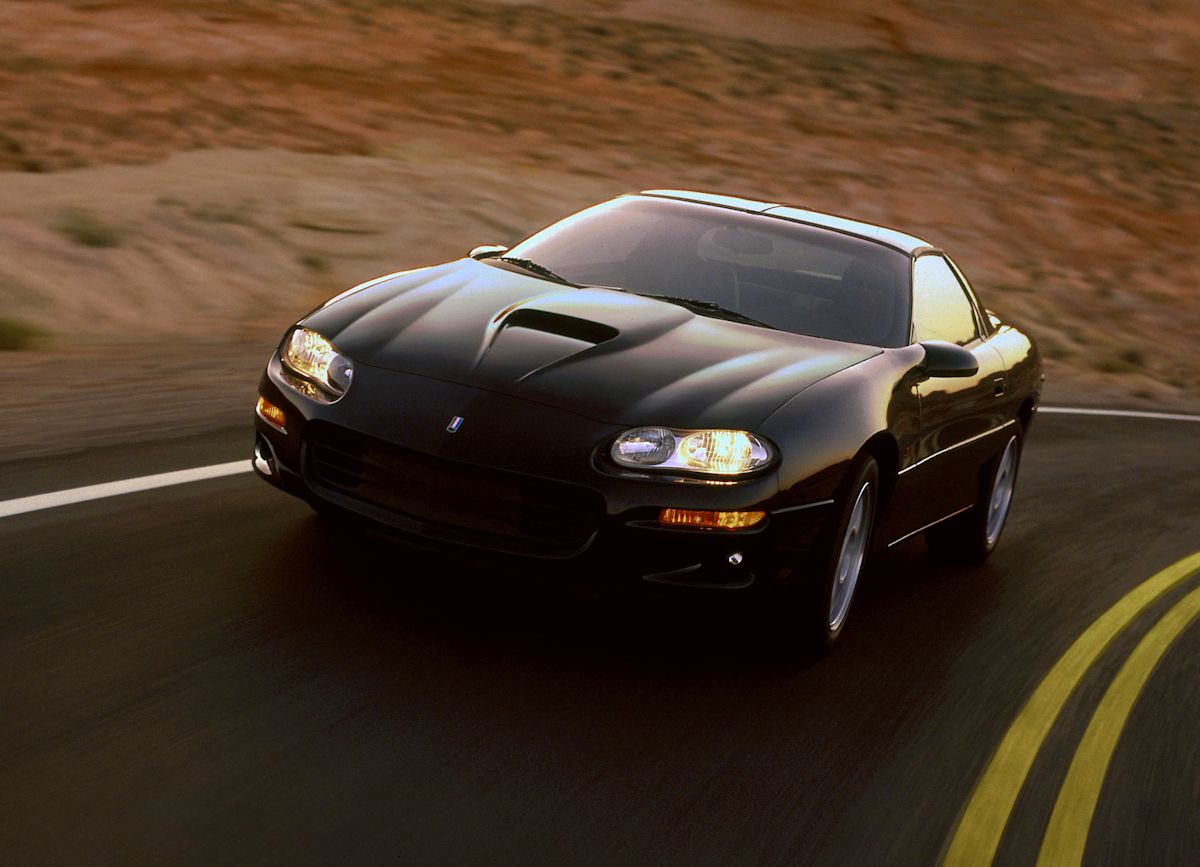
Technical changes took place in 1996 with the introduction of a higher output base motor, along with new available equipment packages. A mid cycle refresh was carried out in 1998, replacing the front clip to incorporate composite headlights in place of quad, rectangular headlights. Enthusiasts refer to this as the transition between the pointed- and flat-nose cars. As the new millennium approached, Chevrolet tweaked some of the cosmetics by offering new colors such as Hugger Orange. Additional updates for the late 1990s included increased fuel tank capacity, a revised steering wheel and new wheel designs.
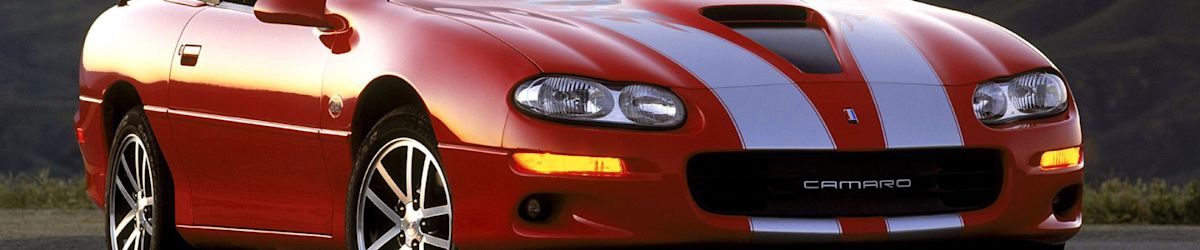
As the fourth-generation Camaro was about to cruise into the sunset about 20 years ago, model year 2002 also marked the 35th anniversary of the original 1967 Camaro. Chevrolet recognized the opportunity to create a special edition model. The result was a striking red Camaro with dual silver stripes. Here are some fourth-gen Camaros for sale
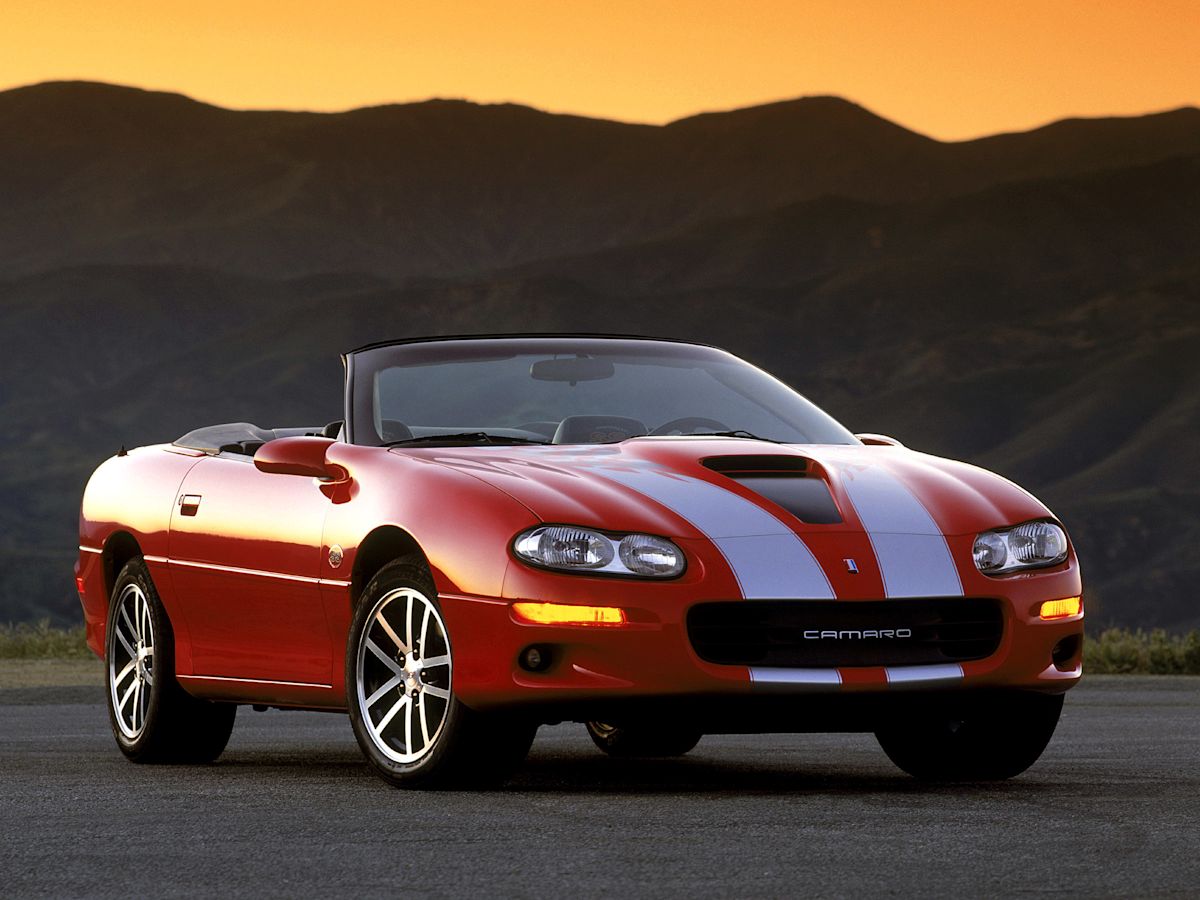
There were only 3,369 of these limited-edition cars produced. It was significant, in part, because no successor had been announced. In fact, the Camaro name would end up taking an eight year hiatus, when a fifth-generation platform launched for the 2010 model year. Find a Camaro for sale
Now that the fourth-generation Camaro is 30 years old, it resides in a unique window of time. The car is old enough to be considered a classic, yet still modern enough to offer conveniences such as fuel injection, and important safety equipment such as anti-lock brakes and air bags. There are a variety of online resources for the fourth-generation Camaro, including the forums at CamaroZ28.com and LS1Tech.com. Perhaps this Camaro has caught your interest as a possible fun-to-drive weekend car. If you’re a fan of the Camaro, or simply want to browse local muscle car listings, check out KSL Cars. Find 1993 through 2002 Camaro listings to whet your appetite! The views or opinions expressed in this article are those of the writer and do not reflect the views or opinions of KSL.com or its employees.